

01
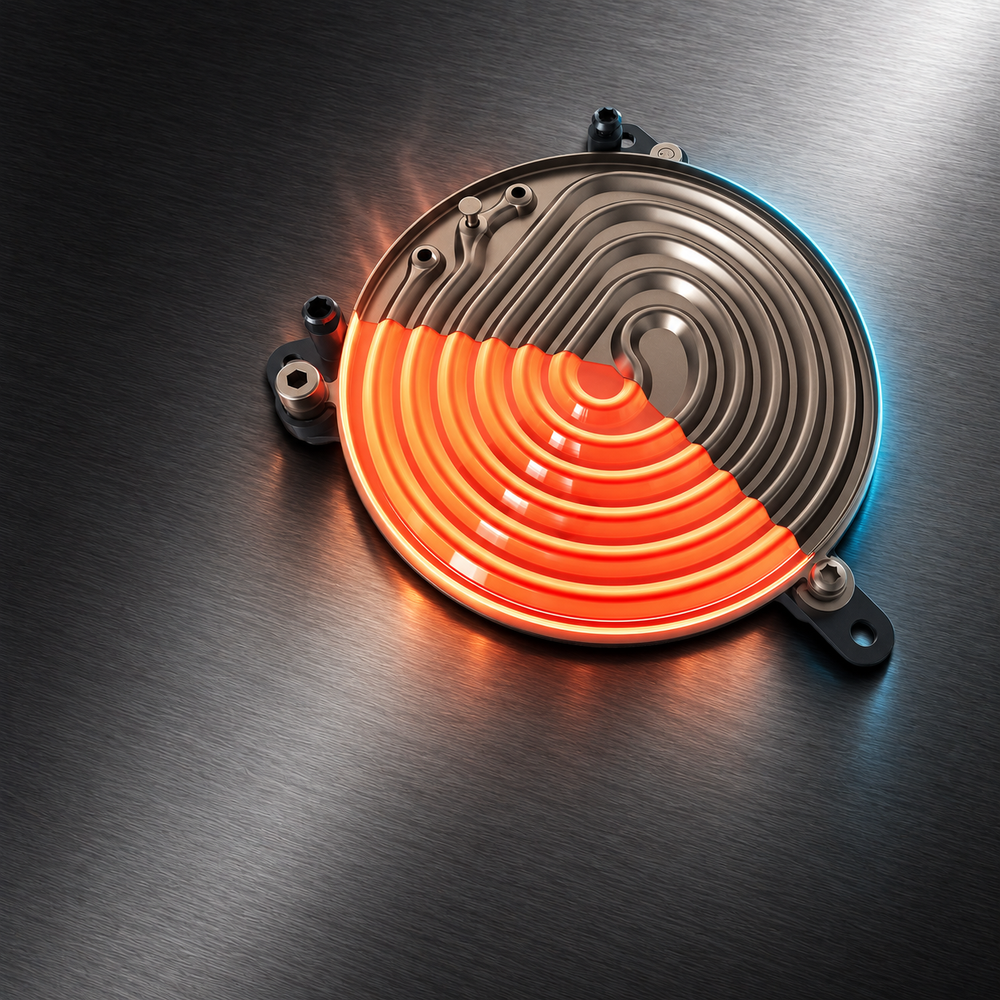
Rapid Heat Transfer
Engineered to move heat efficiently through the brewing system, reducing the time needed before the machine is ready.

Faster heat. Precise control. Better espresso.
Traditional heating systems can require more time to bring the brewing system up to temperature. Flashheat™ Technology is engineered to transfer heat rapidly, helping selected CASABREWS machines get ready to brew in about five seconds.
Ready to brew on selected models

Instead of waiting for a large thermal mass to reach operating temperature, the Flashheat™ system is designed to deliver heat where it is needed with less delay. Temperature sensing and system control work together to support faster preparation and a more responsive brewing routine.
Engineered to move heat efficiently through the brewing system, reducing the time needed before the machine is ready.
Temperature sensing and system control work together to help manage heat during preparation and brewing.
A more responsive heating system means less waiting as you move through espresso preparation and milk steaming.
Available on selected models. Heat-up time and performance may vary depending on the model, starting water temperature and operating conditions.
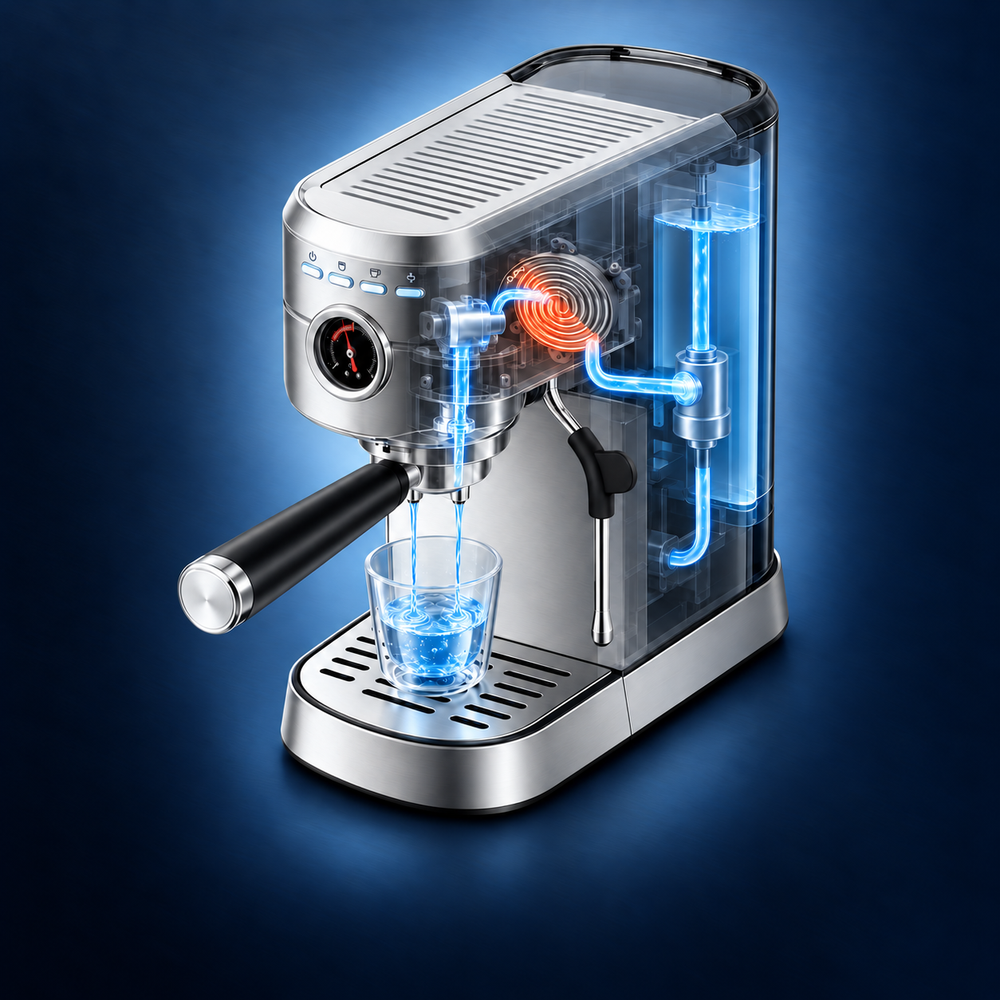
Before water reaches your coffee, it travels through a network of internal components—including tubing, connectors, the pump, heating system, valves and brew head. These parts are mostly hidden, but the materials they use still matter.
We consider material choices throughout the water path—not only the parts customers can see.
PFAS are a large group of fluorinated chemicals valued for properties such as heat resistance, chemical resistance and durability. Certain PFAS are also highly persistent, meaning they can remain in the environment for long periods of time.
Growing awareness of these substances has led consumers and manufacturers to look more closely at the materials used in everyday products—including components that may come into contact with water.
The water path extends beyond the visible reservoir. Water may contact multiple internal components as it is pumped, heated and delivered to the coffee bed.
Materials should be considered not only for performance and durability, but also for where and how they are used throughout the brewing system.
We believe customers should be able to understand the materials and internal systems behind the products they use every day.
On applicable CASABREWS espresso machines, components along the water path are designed without intentionally added PFAS. This reflects a more considered approach to the materials that come into contact with water during everyday brewing.
“Non-PFAS Water Path” refers to water-contact components designed without intentionally added PFAS materials on applicable models. Product construction and features may vary by model.
Espresso extraction is highly sensitive to temperature. Water that is too cool may contribute to under-extraction, while excessive heat can increase bitterness. The goal is not simply more heat—it is greater stability throughout the brewing process.
Temperature influences how quickly different compounds dissolve from the coffee. Greater thermal stability helps create more repeatable brewing conditions, making it easier to achieve balanced flavor from one cup to the next.
May contribute to under-extraction, a thinner body and sharper acidity.
Supports more balanced and repeatable extraction from cup to cup.
May increase bitterness and contribute to over-extraction.
PID control continuously monitors temperature and regulates heating output in response to changing conditions. Instead of relying only on basic on-and-off heating cycles, the system is designed to manage temperature with greater precision.
Temperature sensors monitor conditions within the brewing system.
The controller compares measured temperature with the intended target.
Heating output is regulated to help reduce temperature fluctuation.

Hot water can lose heat as it moves through internal components and reaches the brew head. On selected models, a dedicated heating tube transfers heat to the group head, helping maintain temperature closer to the point of extraction.
By reducing thermal loss before water reaches the coffee bed, group head heating supports more stable and repeatable brewing conditions.
Features vary by model. Group head heating is available only on applicable models. Diagrams are simplified to explain system operation and do not represent exact component placement or scale.
Espresso extraction is not simply about generating pressure. It is about managing how water reaches the coffee, how pressure develops during brewing, and what happens when extraction ends.
On selected CASABREWS machines, pre-infusion, real-time pressure feedback and controlled pressure release work together to create a more considered brewing process.
A pump’s maximum rating does not describe the pressure that should reach the coffee throughout extraction. Excessive or poorly managed pressure may cause water to find weak paths through the coffee bed, contributing to uneven extraction.
The objective is a controlled sequence: gently introduce water, develop pressure through the main extraction, then release residual pressure when brewing is complete.
Before full brewing pressure develops, low-pressure pre-infusion introduces water more gradually to the coffee bed. This gives the grounds time to begin absorbing water and expanding before the main extraction.
A more evenly saturated coffee bed may help reduce weak, preferential flow paths as pressure increases.
The pressure gauge provides visible feedback while the machine is brewing. Rather than treating pressure as a hidden internal event, it gives you another reference point for understanding how the coffee puck is responding.
Grind size, dose, tamping and coffee freshness can all influence the resistance created by the coffee bed—and therefore the pressure shown during extraction.
On applicable models, a solenoid valve helps control the end of the brewing cycle. When extraction stops, the valve redirects residual pressure away from the coffee puck and toward the drip tray.
This helps stop the flow more decisively and can leave a drier, easier-to-remove coffee puck after brewing.
Low-pressure pre-infusion begins saturating the coffee bed.
Pressure builds as water moves through the prepared coffee puck.
On applicable models, residual pressure is redirected after brewing.
Features vary by model. Pre-infusion behavior, pressure feedback and solenoid valve construction apply only to applicable models. Gauge readings are affected by grind size, dose, tamping, coffee freshness and other preparation variables. Diagrams are simplified to explain system operation and do not represent exact component placement or scale.
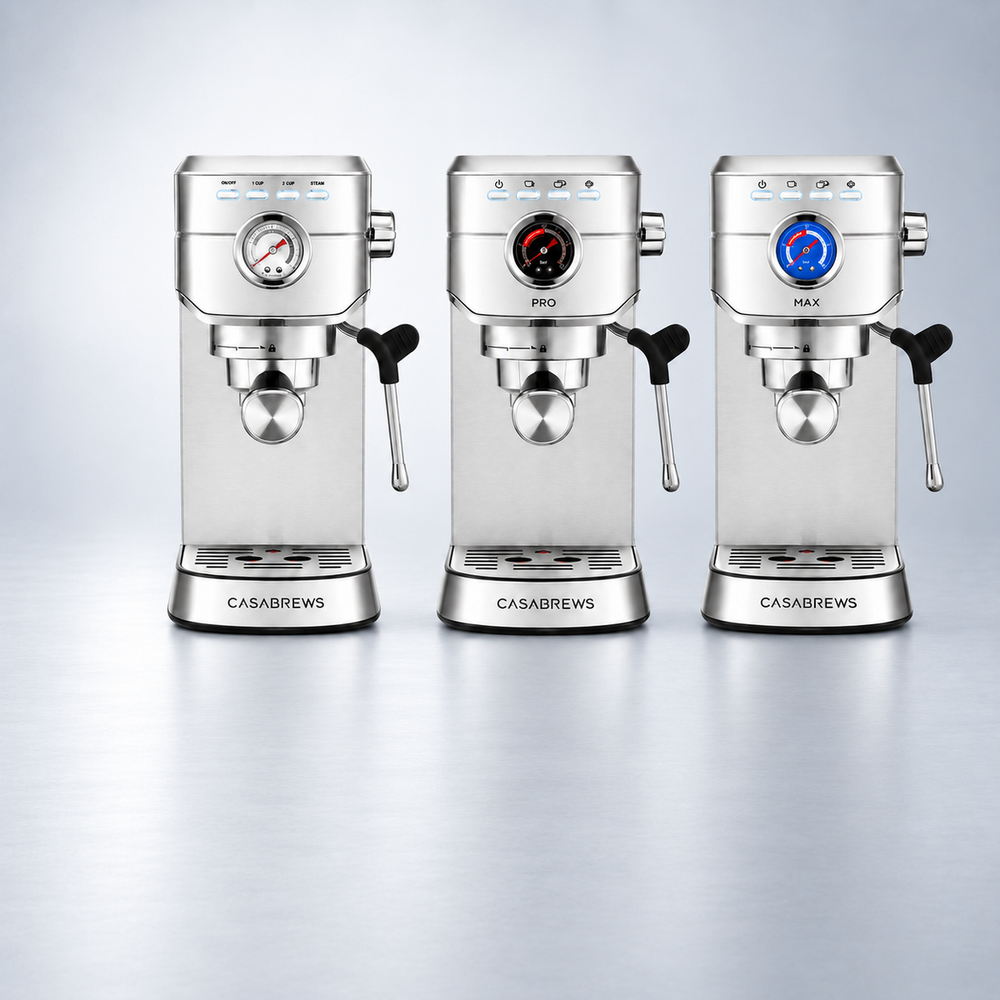
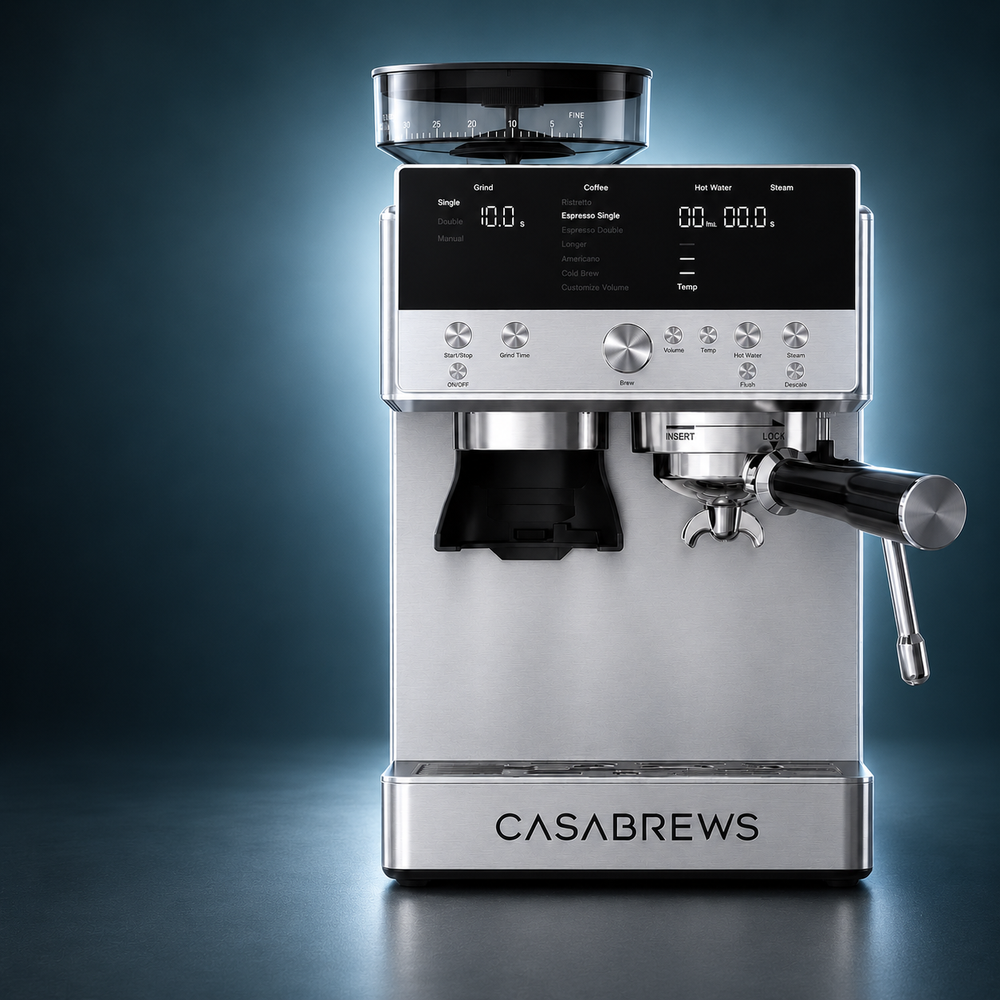
Compare the engineering systems that distinguish each model in the 5418 Series—from proven boiler-based heating to faster thermal response and more advanced extraction control.

A proven boiler-based system designed for dependable everyday espresso preparation.
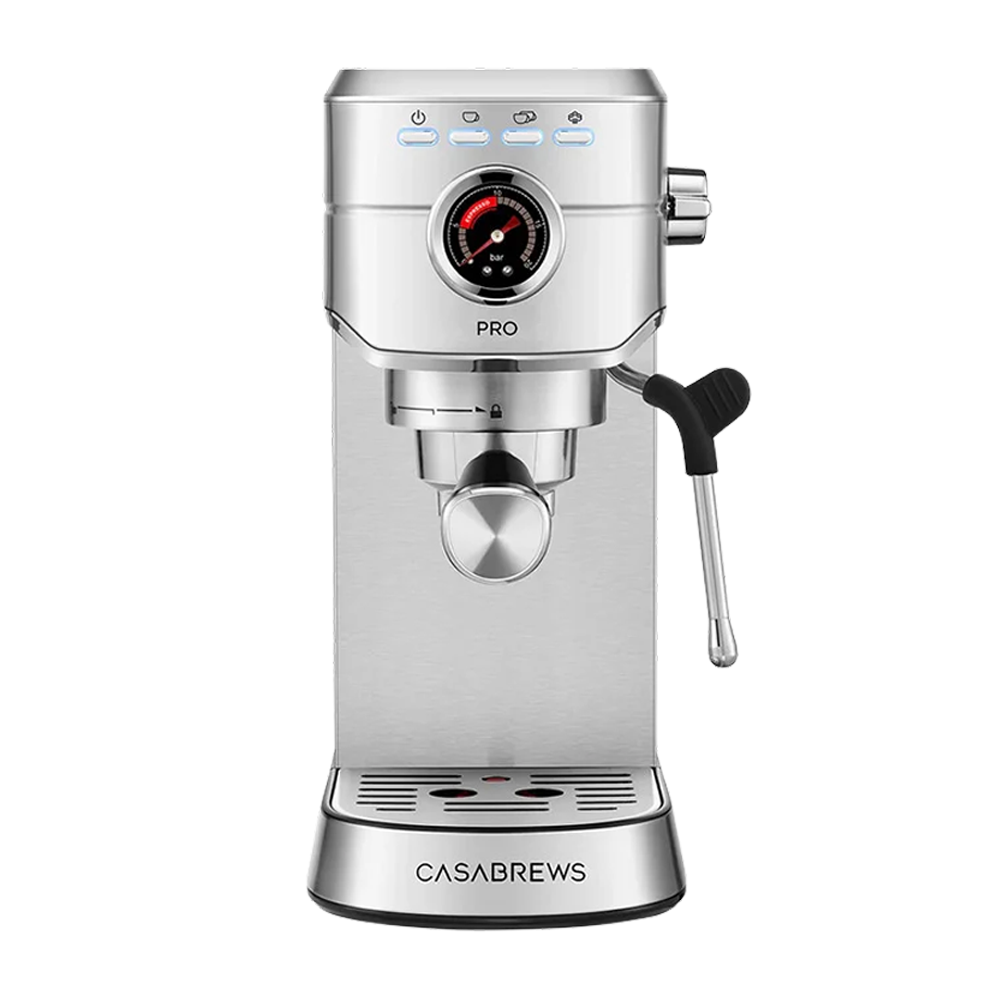
Flashheat™ Technology reduces start-up and transition time for a more responsive daily workflow.
Adds active group head heating and a 3-way solenoid valve for greater thermal and extraction control.
View 5418 Max| Technology | CM5418 | 5418 Pro | 5418 Max |
|---|---|---|---|
| Heating System | Single-Boiler Heating System | Flashheat™ Technology | Flashheat™ Technology |
| Start-Up Time | About 50 seconds | About 5 seconds | About 5 seconds |
| Brew-to-Steam Transition | About 15 seconds | About 3 seconds | About 3 seconds |
| Low-Water Response | Low-Water Alert | Automatic Low-Water Protection | Automatic Low-Water Protection |
| Pressure Release System | Mechanical Pressure Release | Mechanical Pressure Release | 3-Way Solenoid Valve |
| Group Head Heating | Standard | Standard | Active Heating Tube |
PID temperature control, low-pressure pre-infusion, a visible pressure gauge and a thoughtfully designed water path.
Start-up and transition times are approximate and may vary with operating conditions. Features and specifications may vary by model, configuration and market.